

After 36 Years, Coronary Calcium Score Gets Its First Major Upgrade (Agatston-2.0) Led by HeartLung.AI and Dr. Agatston
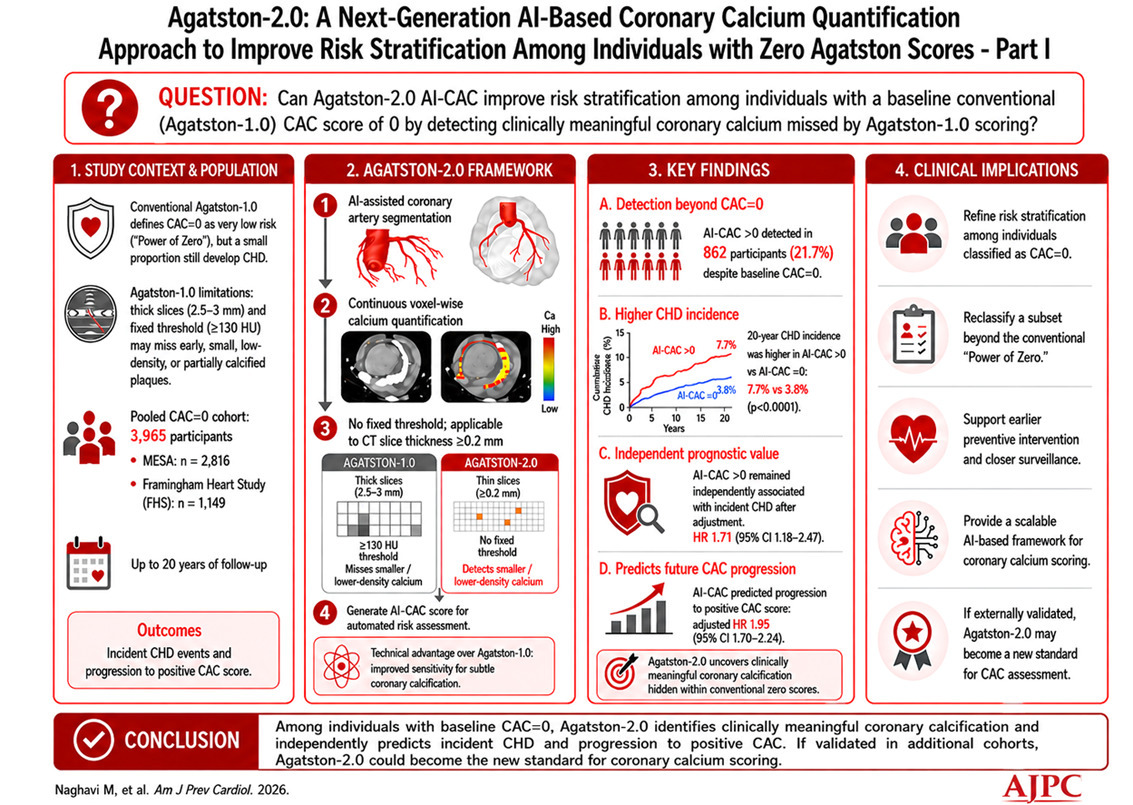
Agatston 2.0
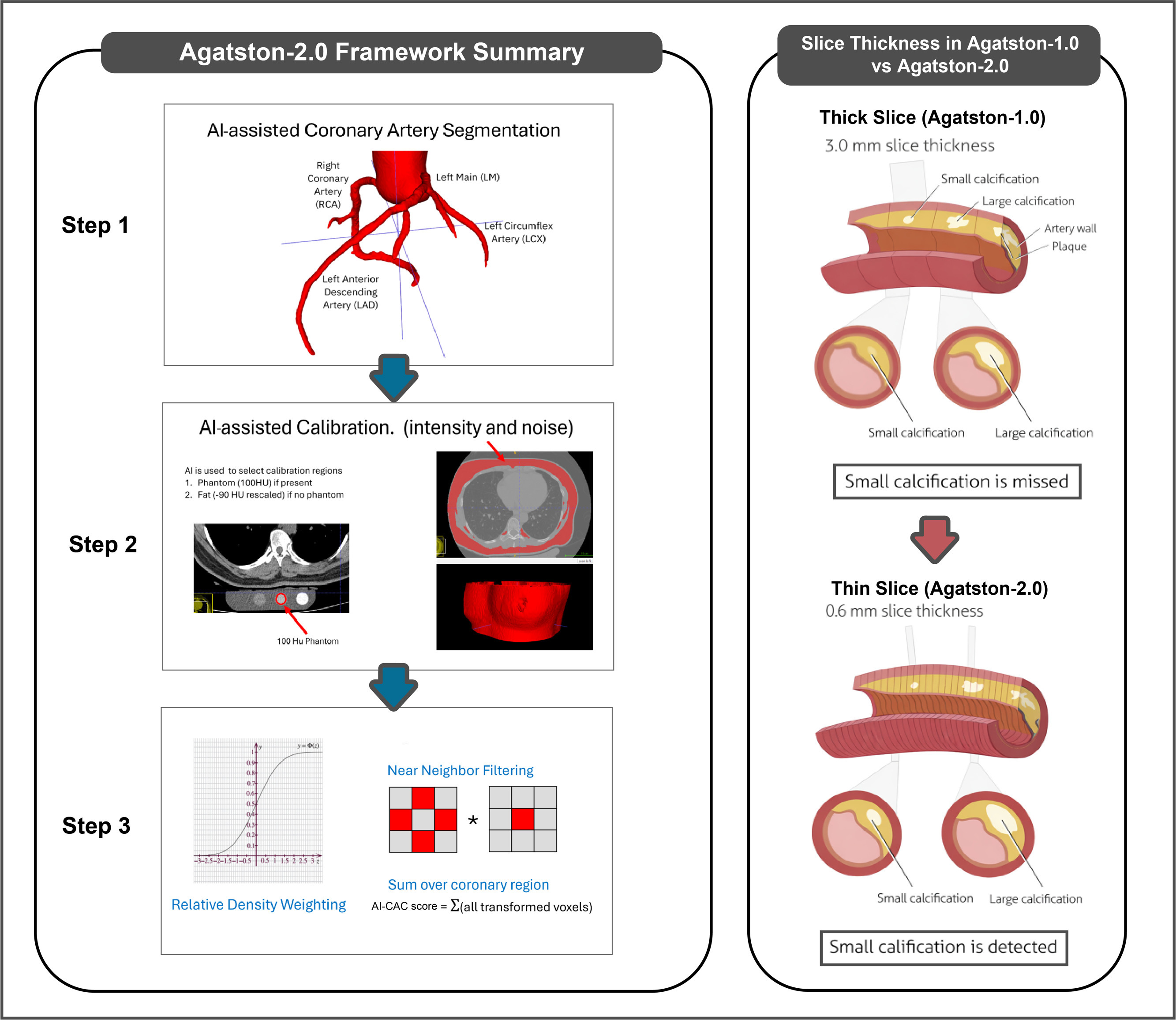
Agatston 2.0 Framework Summary

New study introduces an AI-based coronary calcium scoring method designed to address key limitations of the original Agatston score.
HOUSTON, TX, UNITED STATES, June 12, 2026 /EINPresswire.com/ -- HeartLung Corporation today announced the publication of a landmark peer-reviewed study introducing Agatston-2.0, a next-generation artificial intelligence-based coronary artery calcium scoring method designed to modernize one of the most influential tools in preventive cardiology.The original Agatston score, introduced in 1990 by Dr. Arthur Agatston and colleagues, transformed cardiovascular prevention by giving physicians a noninvasive way to quantify coronary artery calcium and identify silent coronary atherosclerosis before symptoms occur. Over the past three decades, the Agatston score has become one of the most validated and widely used imaging biomarkers in cardiovascular medicine.
Now, 36 years later, a multi-institutional team of leading physicians and researchers, led by Morteza Naghavi, MD, Founder and President of HeartLung Corporation, and Arthur S. Agatston, MD, the original developer of the Agatston score, has introduced the first major AI-based modernization of this historic method.
The study, titled “Agatston-2.0: A Next-Generation AI-Based Coronary Calcium Quantification Approach to Improve Risk Stratification Among Individuals with Zero Agatston Scores – Part I,” was published in the American Journal of Preventive Cardiology.
“This is a defining moment for coronary calcium scoring,” said Morteza Naghavi, MD. “The original Agatston score changed preventive cardiology. Agatston-2.0 builds on that foundation and brings CAC scoring into the era of artificial intelligence, modern CT resolution, and voxel-level quantitative imaging. Our goal is not to diminish the power of the original score, but to make it more precise for today’s technology and today’s patients.”
Why Agatston-2.0 Matters
Traditional coronary artery calcium scoring, now referred to as Agatston-1.0, relies on technical assumptions established in the late 1980s and early 1990s, including a fixed 130-Hounsfield-unit threshold and conventional 2.5–3 mm CT slice thickness. These parameters helped create a simple, reproducible, and clinically powerful scoring system, but they can also miss very small, low-density, fragmented, or partially calcified plaques.
Agatston-2.0 was developed to address these limitations.
Instead of relying on rigid thresholds, Agatston-2.0 uses AI-based coronary segmentation and continuous voxel-wise calcium quantification. This allows the method to detect subtle coronary calcium signals that may be invisible to conventional Agatston scoring, especially in patients reported as having CAC=0.
Refining the “Power of Zero”
A CAC score of zero has long been considered one of the most reassuring findings in cardiovascular prevention. This concept, often called the “Power of Zero,” reflects the very low near-term risk seen in many patients with no detectable coronary calcium by conventional scoring.
However, a small but clinically important number of patients with CAC=0 still experience coronary heart disease events. The newly published study directly addresses this unresolved question: can modern AI detect hidden coronary calcium signal in some patients whose traditional Agatston score is zero?
The answer appears to be yes.
In the study, investigators pooled 3,965 participants with CAC=0 from two major prospective cohorts: the Multi-Ethnic Study of Atherosclerosis and the Framingham Heart Study. Agatston-2.0 detected AI-derived coronary calcium in 862 participants, representing 21.7% of individuals who were classified as CAC=0 by conventional scoring.
Those with AI-CAC greater than zero had significantly higher long-term coronary heart disease risk than those with AI-CAC of zero. Over 20 years, coronary heart disease incidence was 7.7% in participants with AI-CAC greater than zero compared with 3.8% in those with AI-CAC of zero. After adjustment for traditional cardiovascular risk factors, AI-CAC greater than zero remained independently associated with incident coronary heart disease.
Agatston-2.0 also predicted future conversion from CAC=0 to a positive traditional CAC score on repeat CT imaging, suggesting that the AI-detected signal represents clinically meaningful early coronary calcification rather than random image noise.
“These findings refine the Power of Zero,” Dr. Naghavi said. “A conventional CAC score of zero remains extremely valuable, but Agatston-2.0 can distinguish a truly clean zero from a zero that may contain early subthreshold calcified disease. That distinction could be important for prevention, follow-up intervals, and shared decision-making about preventive therapy.”
A New Chapter in Preventive Cardiology
The publication of Agatston-2.0 is especially significant because CAC scoring is already embedded in cardiovascular prevention and supported by decades of outcomes research. Unlike many emerging imaging tests, Agatston-2.0 does not require invasive procedures or a new biological theory of risk. It builds directly on the most established CT-based biomarker in preventive cardiology and updates it for the AI era.
The study’s authors note that Agatston-2.0 may eventually help physicians better personalize cardiovascular prevention by identifying higher-risk individuals within the conventional CAC=0 population while also defining an even lower-risk group with AI-CAC=0.
If validated in additional cohorts and implemented at scale, Agatston-2.0 could become a new standard for coronary calcium scoring.
About the Study
The study was conducted by a broad multi-institutional team including investigators and collaborators from HeartLung.AI, Cornell University, The Agatston Center, UCLA / Harbor-UCLA and The Lundquist Institute, University of California Irvine, Icahn School of Medicine at Mount Sinai, Stanford University, Houston Methodist, Cedars-Sinai, Kaiser Permanente, University Medical Center Groningen, University Hospital Basel, and other leading cardiovascular imaging and preventive cardiology institutions.
Publication details:
Article: Agatston-2.0: A Next-Generation AI-Based Coronary Calcium Quantification Approach to Improve Risk Stratification Among Individuals with Zero Agatston Scores – Part I
Journal: American Journal of Preventive Cardiology
DOI: 10.1016/j.ajpc.2026.101698
About HeartLung Corporation
HeartLung Corporation is a pioneer in AI-driven preventive imaging focused on early detection of cardiovascular disease, lung cancer, COPD, osteoporosis, fatty liver disease, and other conditions detectable on CT scans. Its flagship platform, AI-CVD, transforms routine CT imaging into a scalable preventive health assessment by quantifying cardiovascular and systemic biomarkers, including coronary artery calcium, cardiac chamber size, aortic and valvular calcification, epicardial fat, lung density, liver fat, bone mineral density, and muscle-fat composition.
About AI-CAC and AutoCAC
HeartLung AI’s AutoCAC represents automated Agatston-1.0, delivering fast, reproducible coronary artery calcium scoring aligned with the traditional CAC method at scale.
HeartLung AI’s AI-CAC represents Agatston-2.0, an advanced AI-native approach designed to quantify coronary calcium more sensitively and detect early, subtle, or lower-burden disease that may be underestimated by conventional scoring.
Marlon Montes
HeartLung Technologies
+16504147303 ext.
email us here
Visit us on social media:
LinkedIn
X
Legal Disclaimer:
EIN Presswire provides this news content "as is" without warranty of any kind. We do not accept any responsibility or liability for the accuracy, content, images, videos, licenses, completeness, legality, or reliability of the information contained in this article. If you have any complaints or copyright issues related to this article, kindly contact the author above.
